Care that fits each client

Every client is different. What is normal for one person can be a reason to look in on another.

SentraCare helps support workers notice changes in time. In the background it watches what is happening and only gives a cue when that is needed.

That way the client keeps the space and independence that fit them, while support workers know when their attention is needed.

Support worker and client in a homely setting

You cannot be everywhere at once

Disability care is using more and more technology. Sensors, alerting and other aids.

The more systems there are, the more alerts come in. Not every alert means something is immediately wrong.

For support workers it can then be hard to tell when help is needed.

SentraCare helps tell signals that need attention from situations that can wait.

Less listening in. More rest.

A night shift wants to be available when someone needs help. But when you mainly have to listen in, it is hard to tell what is actually going on.

A client turns over. Someone coughs. A radio is on. Or someone gets out of bed. Not every sound tells you what is needed.

With different sensors you get more information about what is happening. A bed mat, for example, shows whether someone is in bed or out of bed. Wandering detection shows when someone leaves an agreed zone.

SentraCare brings these signals together and looks at them in the context of the client and the moment. A care question then arises when that is needed, without the night shift having to listen along all the time.

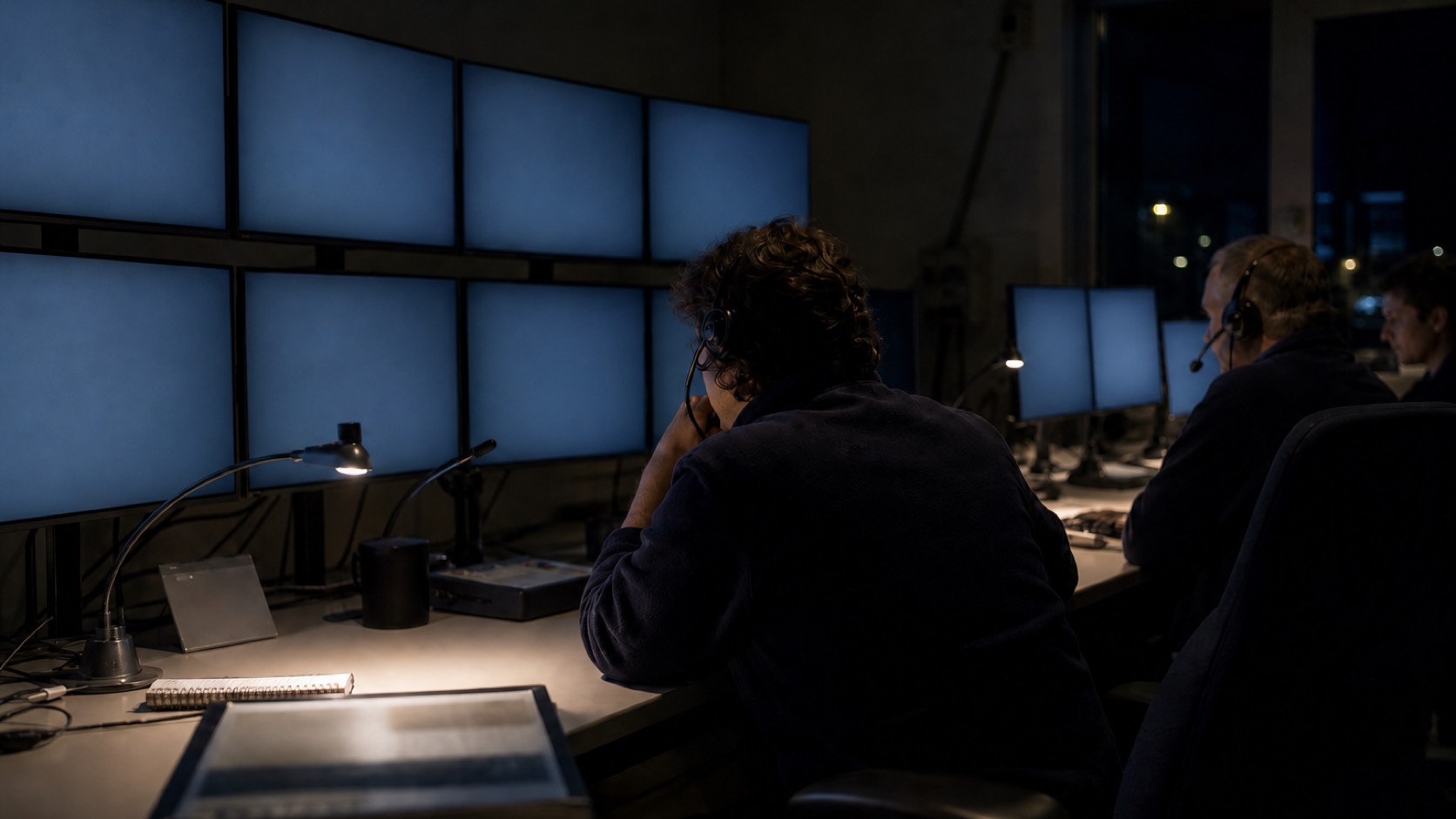
Listening in

Old night shift: staffed control room with screens and headsets
Every sound or movement can produce an alert. The night shift has to decide what matters.

With SentraCare

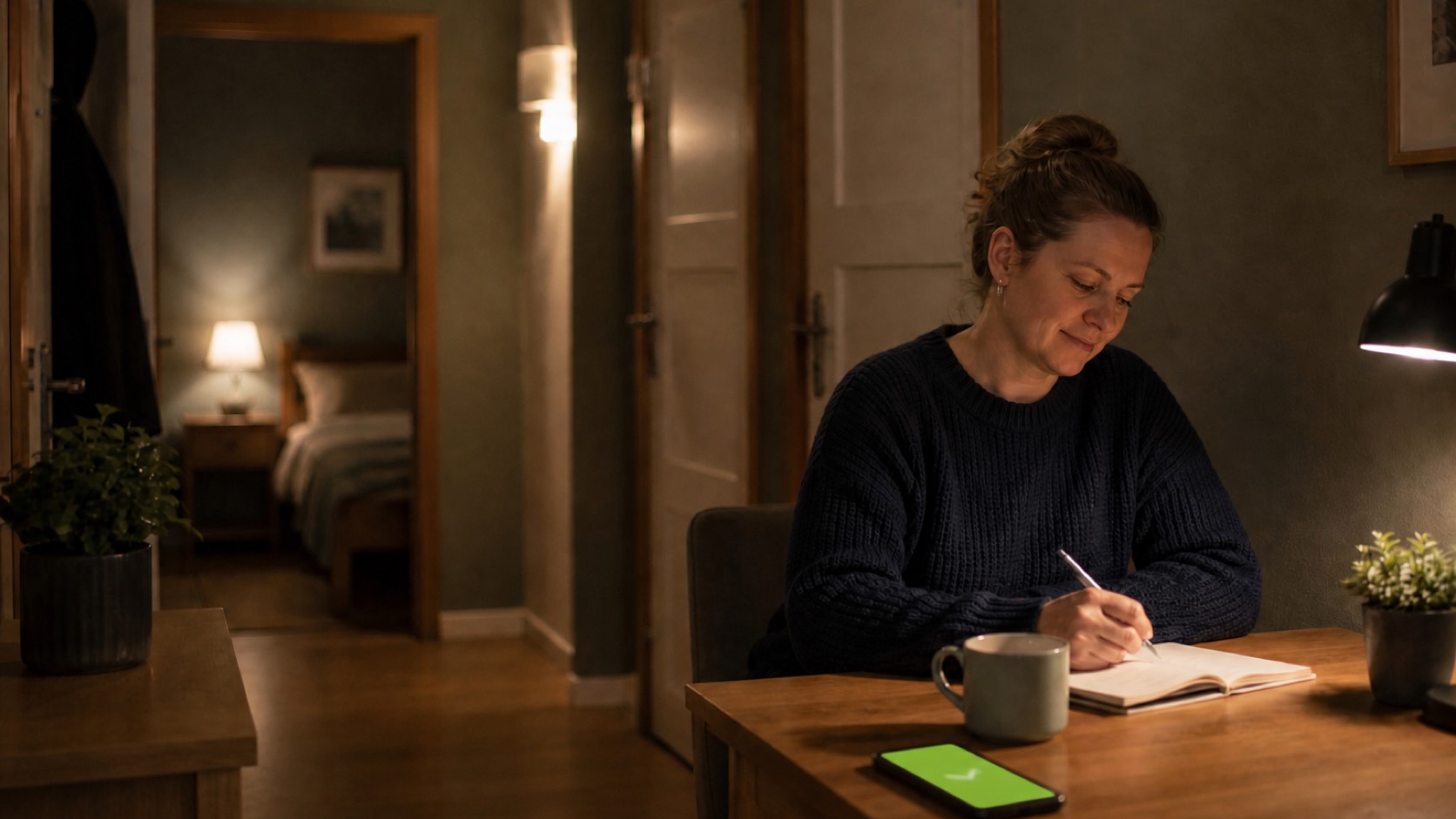
Night availability service checking a green care question on a phone, without listening in
SentraCare brings the signals together. A care question arises when that is needed.

Not every signal has to become an alert

SentraCare brings information from different sensors and systems together. The care organisation decides in advance which signals need attention in which situation.

For example:

  • What is normal for this client?
  • What has been agreed?
  • When is it time to alert someone?

SentraCare carries out these agreements. A signal only becomes a care question when the rules set in advance say that it is needed.

Direct action

When it matters

In a fall, an epileptic seizure or another emergency, every second counts. SentraCare immediately cues whoever is available at that moment. The right help can start quickly.

Do not interrupt without need

When it can wait

A client gets out of bed. That does not have to mean someone must look in straight away. If it is known that this client may get up independently and usually returns after a few minutes, there does not have to be an alert. If the client stays away or the situation changes, SentraCare still gives a cue.

From signal to care question

SentraCare keeps several situations in view at once

Two signals in the same night. One can wait, the other needs action now. If someone does not return within the agreed time, SentraCare alerts the available support worker.
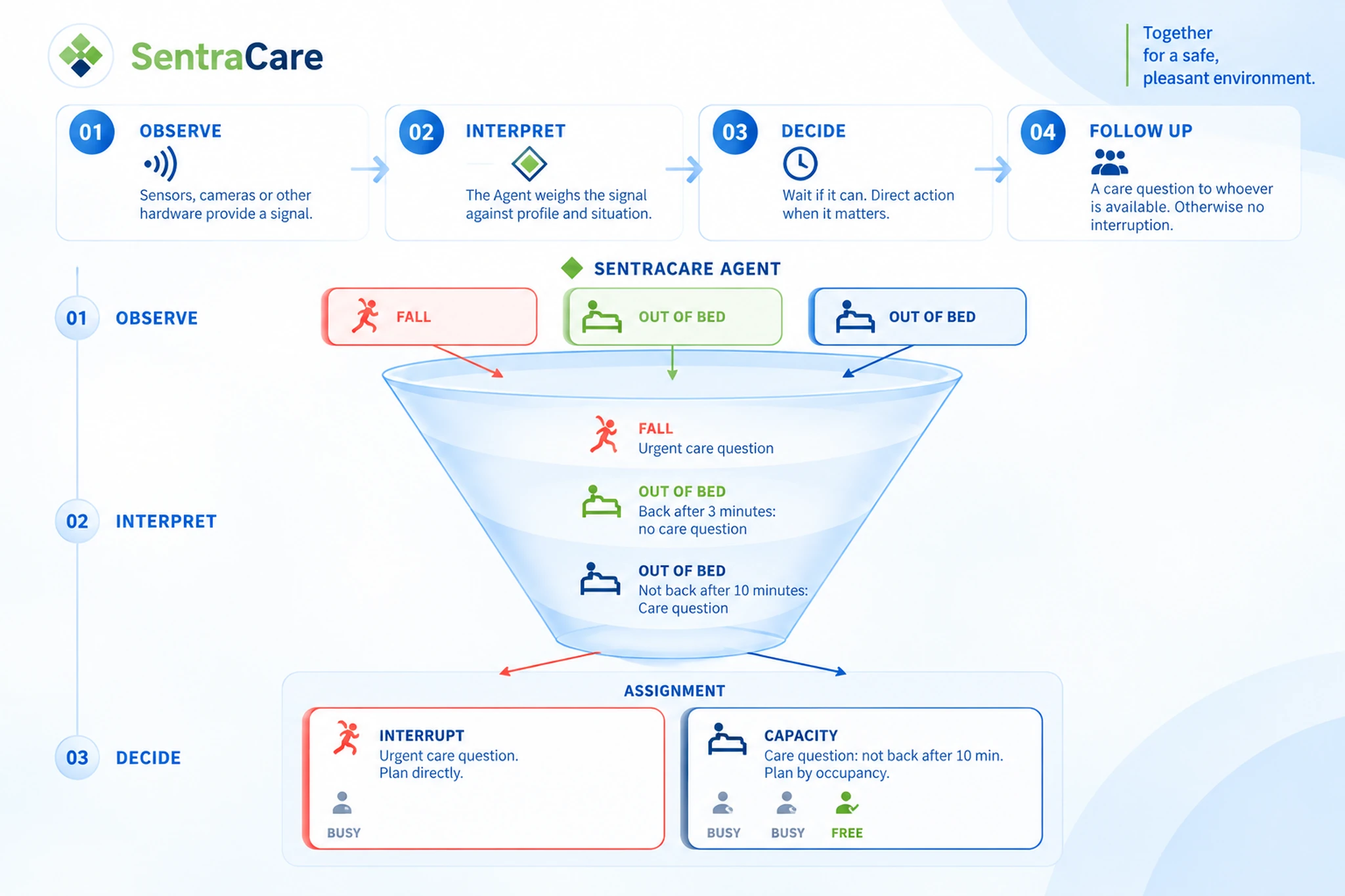
From observe to follow up: the Agent weighs a fall and out-of-bed, and assigns interrupt or capacity.

SentraCare combines several signals and looks at the situation. Only a care question that needs attention is forwarded to an available support worker.

What is normal differs per client

The same signal can mean something else for one client than for another.

One person may get up independently. Another needs help. One walks around at night regularly. For another that can be a change.

SentraCare takes each client's situation, behaviour and care agreements into account.

The client is at the centre. The technology follows.

Existing technology can simply stay

Many care organisations already work with different sensors and systems. SentraCare is not a reason to replace those investments.

The platform is brand-independent and brings different technologies together in one place. That creates one clear picture of what is happening.

That means fewer separate systems to watch, and fewer alerts that have to be judged by hand.

How does SentraCare help in practice?

SentraCare watches the situation in the background, so the support worker can give attention where it is needed.

Night watch

A client gets out of bed. SentraCare knows what is normal for this client and only gives a cue when the situation calls for it.

Epilepsy

A specialised sensor can detect an epileptic seizure. SentraCare makes sure that information reaches the right person.

Mobility

Changes in movement can say something about a client's situation. SentraCare helps notice those changes, so support workers can look in time at what is needed.

Social

Changes in daily behaviour can matter too. Is someone withdrawing more and more? Or unusually restless? SentraCare helps make changes in the daily living pattern visible.

Out of bed

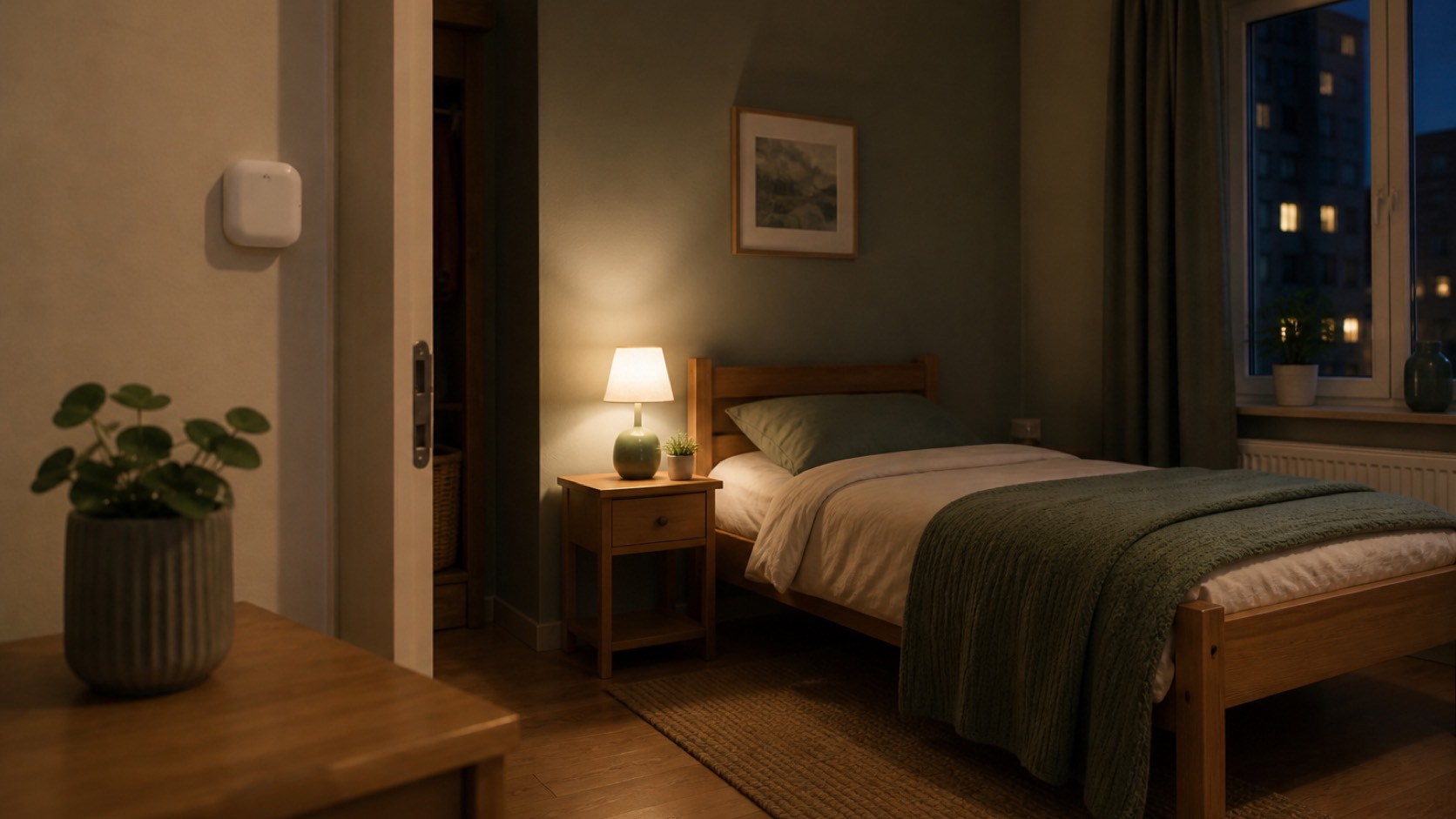
Quiet group bedroom at night, with a discreet sensor by the bed
Normal behaviour or a reason to act?

Epilepsy

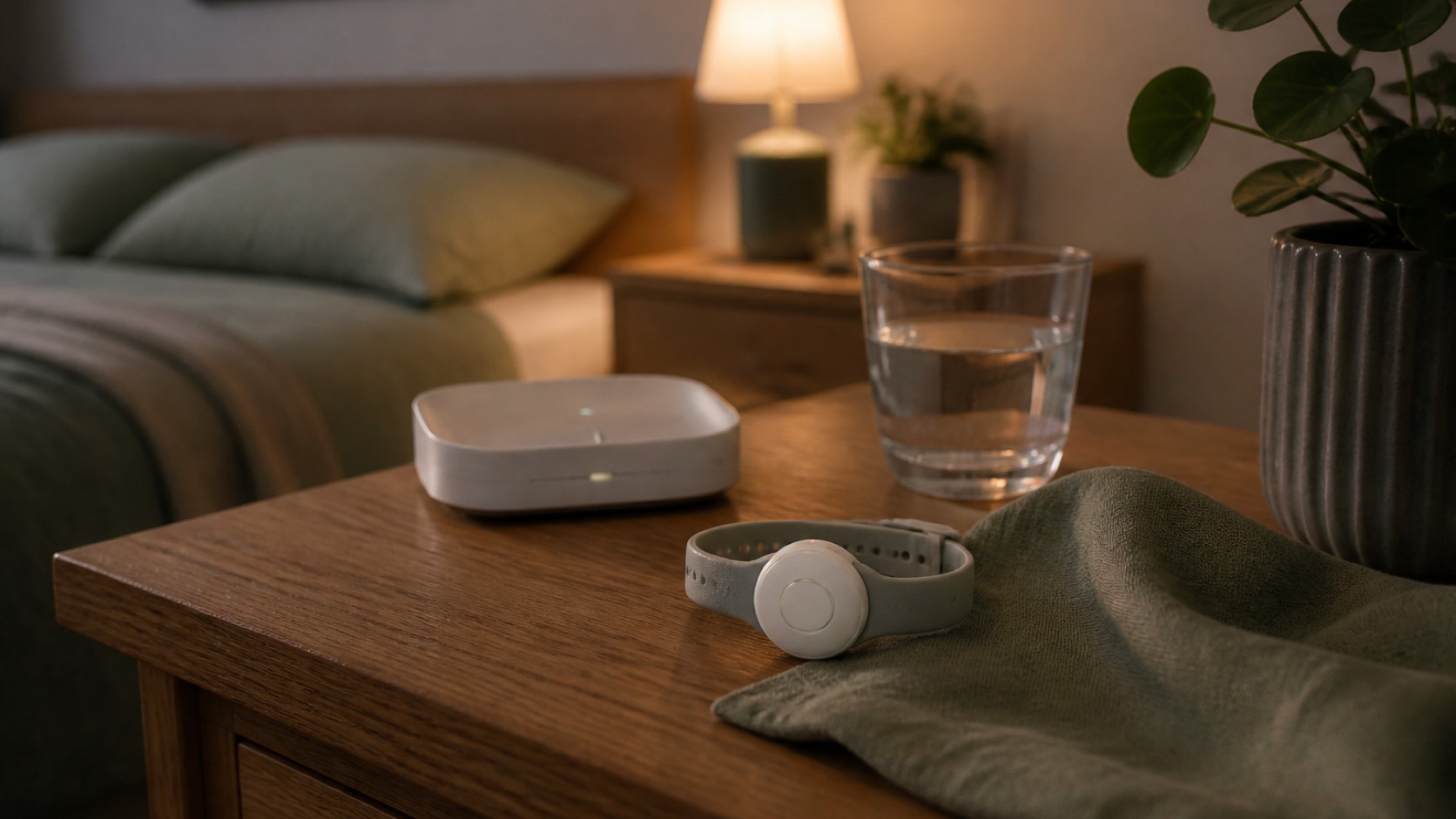
Connected epilepsy detector on a nightstand
Detect and bring in the right help

Technology that adapts to the client

Good care starts with the client. Technology should help with that, not add extra work. With SentraCare, support workers get a picture of what is happening, without every small change becoming an alert.

Clients keep as much independence and rest as possible. Support workers get fewer unnecessary interruptions and can put their attention on the people who need them.

See what SentraCare can mean for your organisation.

SentraCare | Disability care